The Most Beautiful Music Chet Baker Ever Made Came From the Worst Years of His Life
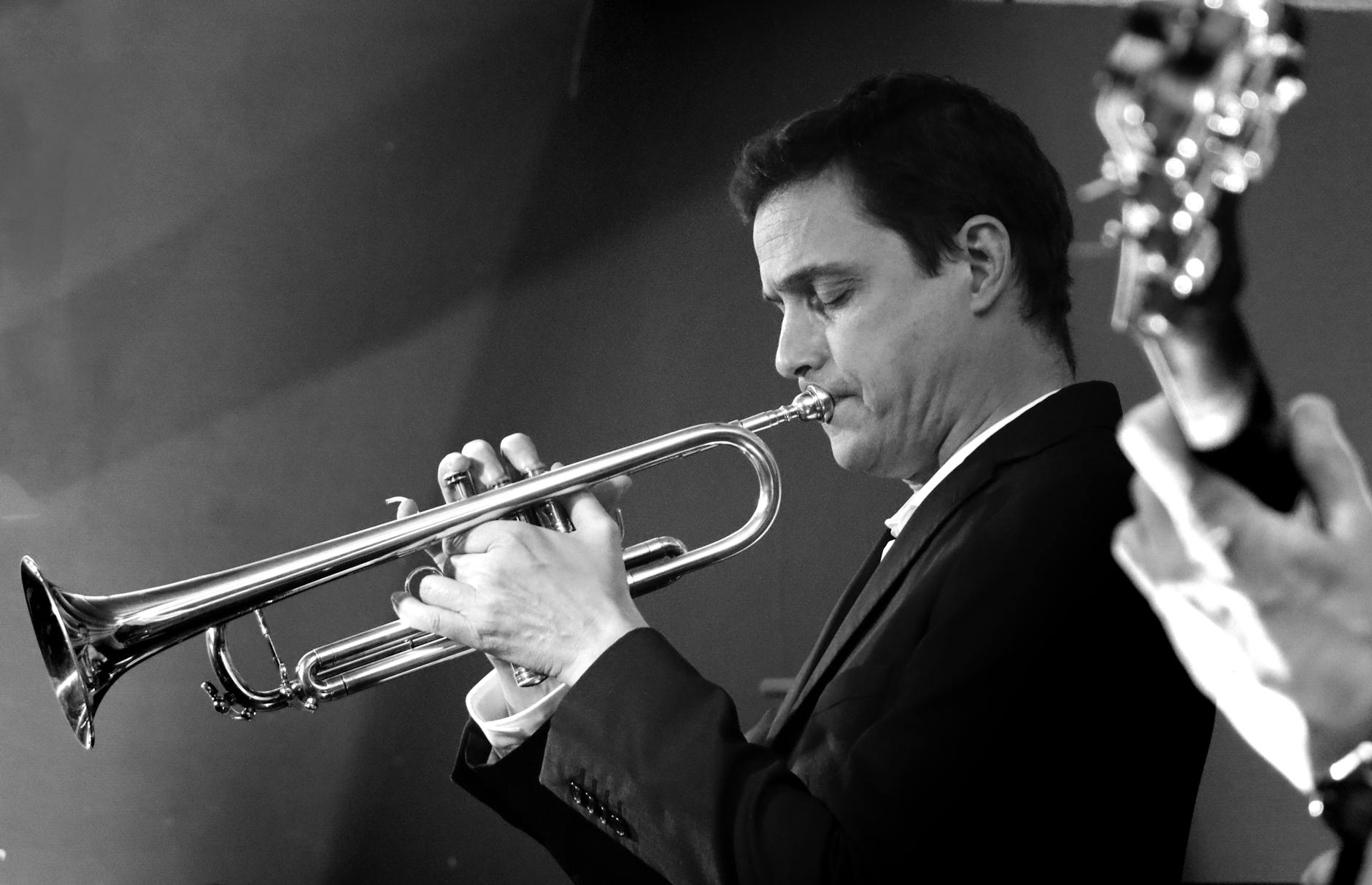
The Most Beautiful Music Chet Baker Ever Made Came From the Worst Years of His Life
There's a version of Chet Baker's story that gets told at cocktail parties and in documentary films — the golden California boy with the movie-star face who could make a trumpet sound like a human voice whispering something it was afraid to say out loud. The prodigy. The cover of Down Beat. The guy who, for a brief, luminous stretch in the early 1950s, seemed like he might just be the most naturally gifted musician alive.
That version is true. It's just not the interesting part.
The interesting part is what happened after the fall. And the fall, when it came, was long and ugly and very, very public.
From the Top of the World to a Parking Lot in Canoga Park
By the mid-1960s, Baker's heroin addiction had swallowed almost everything. His passport had been revoked. European countries where he'd once played to standing ovations had banned him outright. His teeth had been knocked out in a drug-related assault in San Francisco — a particularly cruel blow for a trumpet player, who depends on embouchure the way a surgeon depends on steady hands. Record labels weren't calling. The gigs dried up.
For stretches of the late 1960s and into the 1970s, Baker lived essentially without a fixed address. He slept in his car. He worked odd jobs — including, at various points, as a gas station attendant — to scrape together enough money for the next fix. The man who had once recorded alongside Charlie Parker and traded phrases with Gerry Mulligan was, by any conventional measure, finished.
Here's the thing about conventional measures, though: they have no idea what they're talking about.
Learning to Play All Over Again
What almost no one talks about when they tell the Chet Baker story is what happened in the months after his teeth were replaced. Baker had to relearn how to play the trumpet from near scratch. The embouchure he'd spent his entire life developing — the precise architecture of muscle and breath that produced that impossibly tender tone — was gone. He was, at an age when most musicians are coasting on muscle memory, essentially a beginner again.
For a lesser artist, or a more sensible one, that would have been the end of the story. Baker chose to treat it as a problem worth solving.
The recordings he made during his rehabilitation and in the years that followed have a quality that his early work, for all its brilliance, simply doesn't. There's a fragility in the phrasing, a sense of each note being placed with extraordinary care, as though he understood for the first time how easily it could all disappear. Critics who had dismissed him as a relic started paying attention again. Quietly, then loudly.
The Crooked Path Was the Point
Here's the uncomfortable idea at the heart of Baker's story, the one that doesn't fit neatly on an inspirational poster: it wasn't despite the chaos that Baker made his most enduring music. It was partly because of it.
The polished young star of the early 1950s was playing with tremendous technique and very little scar tissue. The older Baker — the one who had lost everything, rebuilt his face, relearned his instrument, and stared down his own obsolescence — had something the younger version never did. He had something to say that you could only learn by living through it.
Listen to his 1974 recording of Almost Blue, or his late-career version of My Funny Valentine — a song he'd recorded dozens of times — and you're not hearing virtuosity. You're hearing a man who has been all the way down and back, playing a love song with the full knowledge of what love costs. It's unbearable in the best possible way.
The jazz critic Gary Giddins once described Baker's late playing as sounding like "a man confessing something in an empty room." That's exactly right. And you don't get that quality from a comfortable life.
What We Almost Lost
It's worth sitting with the near-miss for a moment. There were years — real, extended stretches — when Chet Baker could easily have vanished entirely. When the music world had collectively decided the story was over. When he himself may have believed it.
The recordings from those late years exist because someone kept showing up. Because Baker, for all the chaos and self-destruction, never fully stopped playing. Because a handful of European producers — most notably in the Netherlands and Germany, where his reputation had survived better than it had at home — kept offering him studio time when American labels wouldn't.
The world came genuinely close to losing those recordings. Not in a dramatic, narrative sense, but in the quiet, administrative way that things get lost: no label, no audience, no money, no reason to keep going.
He kept going anyway.
The Last Chapter
Baker died in Amsterdam in 1988, falling from a second-floor hotel window under circumstances that were never fully explained. He was 58. In the final decade of his life, he had experienced something like a second act — critical rehabilitation, a new generation of listeners discovering his work, a documentary that introduced him to audiences who'd never heard of him.
But the real second act wasn't the recognition. It was the music itself, made in the worst years, when no one was paying attention and there was no particular reason to believe anyone ever would again.
Some crooked paths lead to remarkable destinations. Chet Baker's path was the destination — every detour, every dead end, every humiliation folded into the sound of a trumpet played by a man who had absolutely nothing left to prove and everything left to say.
That's the version of the story worth telling.