He Sold Pastrami, Not Sneakers. He Still Built the Shoe You're Probably Wearing.
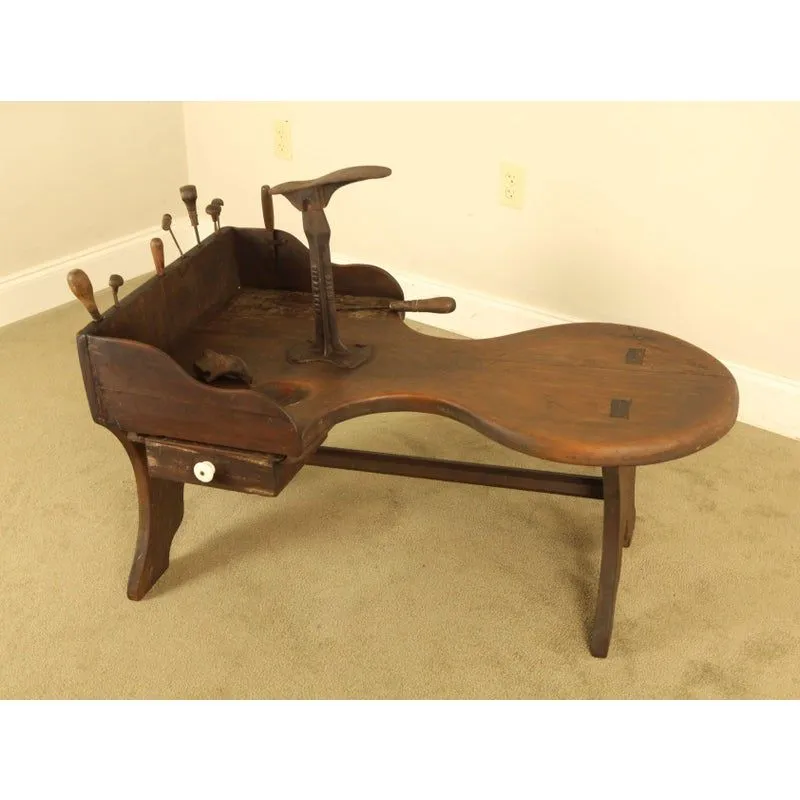
Photo: vintage cobbler workbench with leather and shoe tools, via i.pinimg.com
Everybody in the neighborhood knew Sal's Deli for the sandwiches. Nobody knew that the real workshop was in the back, past the walk-in cooler, where Sal Marchetti spent every slow afternoon hunched over scraps of rubber and canvas like a man building a boat in his basement.
Sal was not a shoe guy. He was a deli guy — second-generation, working the counter his father bought in 1958 in a working-class patch of New Jersey. But runners came through constantly. Track kids from the high school, gym rats, the occasional marathoner training along the reservoir. And they all said the same thing: the shoes on the market were terrible. Stiff. Heavy. Built like dress shoes with thicker soles.
Sal, being the kind of man who could not let a complaint go unanswered, started saying things like "how hard could it be?"
The Bench in the Back
The answer, it turned out, was: quite hard. But Sal had two things the big manufacturers didn't.
First, a cobbler's bench inherited from his father, and forty years of watching him repair actual human feet in actual human shoes. Second, total ignorance of the industry's rules — and therefore no reason to follow them.
At the time, the established athletic companies designed running shoes the way they'd always designed them: a rigid sole, a narrow last, form over function. Sal didn't know the conventions, so he didn't inherit the mistakes. He made a prototype from a kitchen doormat and a canvas sneaker, gluing a waffled rubber sole — he'd run the material through the deli's meat tenderizer to give it grip — onto a shoe cut wide enough for a foot that was actually moving.
The runners who tried it came back with an expression Sal had never seen behind the counter: awe. One of them, a college coach, asked if he could buy six pairs. Sal had made one.
"He's a Sandwich Man"
When Sal tried to interest the major manufacturers, the response was uniform and dismissive. One regional sales manager reportedly looked at the prototype, looked at Sal's apron, and said, "Pal, you make a great pastrami. Stick to it."
The industry's logic was airtight: no engineering background, no factory, no distribution, no credentials. Every reason he couldn't was true. None of them mattered.
Because Sal's lack of training meant he'd built the shoe around the runner instead of the factory. His waffled outsole — improvised with deli equipment — gave cushioning and traction that the rigid soles couldn't touch. His wider toe box matched what runners' feet actually did over long distances. Word spread the way word does: coach to runner, club to club, the reservoir loop to the regional circuit. Within a few years, athletes were showing up to races in shoes that looked suspiciously like the ones made in the back of a deli in Jersey.
The big companies noticed. Then they copied. Then they patented improvements on the copy.
The Boom Built on a Doormat
Sal never became a billionaire. Licensing deals came late and paid modestly, and he kept the deli until he died, because — in his words — "you don't abandon a good regular." But the running boom of the last half-century, the billion-dollar industry of cushioned, grippy, foot-shaped shoes, traces straight back to that back-room bench and a doormat run through a meat tenderizer.
Every jogger lacing up before work, every marathoner in a waffle-soled racing flat, is wearing a piece of Sal's stubbornness. The experts knew how shoes were supposed to be made. Sal just knew how feet were supposed to feel.
Sometimes that's the whole difference. The credentials tell you what can't be done. The complaint at the counter tells you what needs to be.