Rejected by Every Label in Nashville, She Hit Record Anyway — and Made the Industry Beg
The rejection letters — if you can call form emails rejection letters — came in fast. Amelia Watkins had driven from Knoxville to Nashville seventeen times in eighteen months. She had sat across from A&R reps in glass-walled offices and watched them smile politely while their eyes went somewhere else. She had been told, in various combinations of corporate warmth and total indifference, that her music was interesting but not quite right, that her voice was lovely but her sound was hard to market, that maybe she should think about writing for other artists.
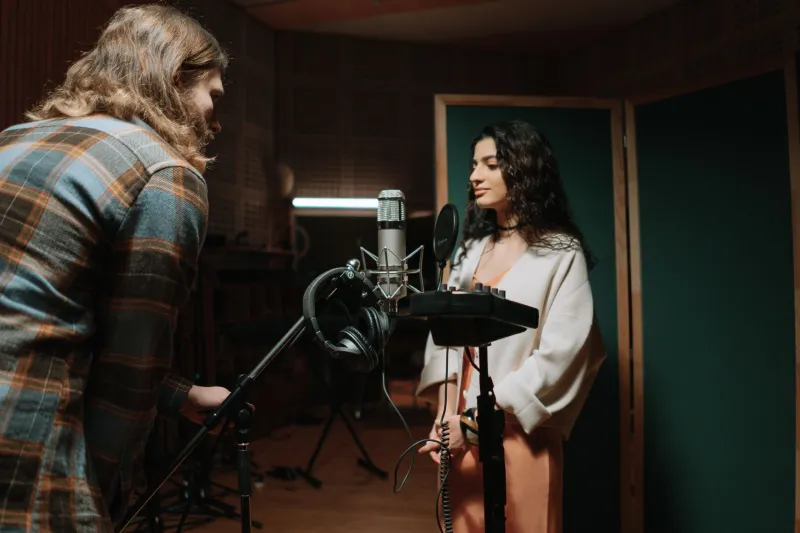
She drove home the last time and sat in her driveway for a long while. Then she went inside and bought a microphone.
The Bedroom That Became a Studio
This was 2012, which is to say it was early enough that what she was about to do felt genuinely risky, but late enough that the tools to do it were finally affordable. GarageBand. A Focusrite interface. A secondhand condenser mic she found on Craigslist. A closet stuffed with winter coats that turned out to be surprisingly good acoustic dampening.
Watkins had no production training. She had a music degree from the University of Tennessee that had taught her theory and performance but nothing about the technical architecture of a recording. So she did what people do when they need to know something and can't afford to pay someone else to know it for them: she watched YouTube tutorials for eight hours a day, tried things, broke things, tried again.
The first two songs she recorded were, by her own assessment, genuinely bad. The third one she posted to SoundCloud on a Thursday night with no particular strategy, tagged it loosely, went to bed, and woke up to 4,000 plays.
She had no framework for what that meant. She posted another one.
Building the Audience the Industry Said Didn't Exist
The A&R reps had told her the audience for her music — a blend of Americana, indie folk, and what she called "kitchen-sink storytelling" — was too fragmented to monetize. Too smart for country radio, too twangy for indie tastemakers, too emotional for the algorithmic playlists that were beginning to dominate streaming. She was, in their estimation, a niche artist in a market that had no patience for niches.
What they missed — what the industry kept missing, year after year, in story after story — was that the internet had permanently changed what "niche" meant. A fragmented audience of 200,000 deeply loyal listeners who will buy your vinyl, come to your shows, and evangelize to their friends is not a problem. It is a business. It just doesn't look like the business the labels knew how to run.
Watkins figured this out not through strategy but through accident. She started replying to every comment. Not with a thumbs-up emoji, but with actual sentences. She posted videos of herself recording, making mistakes, starting over. She told stories on Instagram before Instagram Stories existed — long captions about the specific memory behind a specific lyric, the fight she'd had with her mother that became a bridge, the drive through East Tennessee that became a chorus.
People didn't just like her music. They felt like they knew her. And in the attention economy, that distinction is everything.
The Crowdfund That Changed the Math
In 2014, Watkins needed to record a full-length album. She didn't have the money. She launched a Kickstarter with a goal of $15,000 — enough to rent a proper studio for a week and hire a drummer and a bassist she'd been playing with locally.
She hit $15,000 in eleven hours.
By the time the campaign closed, she had raised $94,000 from 3,200 backers. The checks — actual paper checks, because Kickstarter still mailed them back then — arrived while she was on a small regional tour, playing venues that held 200 people and selling out every one of them.
The album, recorded that winter, was released independently. No label. No distributor in the traditional sense. She used DistroKid to get it onto Spotify and Apple Music, sold physical copies through her own website, and offered a tiered system for superfans — signed copies, handwritten lyric sheets, a version of the record with a bonus track that only backers received.
In its first month, it sold 12,000 copies. By the end of the year, she had played 140 shows across 34 states and turned a profit on every single one.
When the Labels Came Back
They came back, of course. They always do, once the math is undeniable.
Two major labels reached out within eighteen months of the album's release. One offered a deal that, on paper, looked generous — an advance, a marketing budget, full support for a national rollout. Watkins took the meeting. She listened. She asked a single question: who owns the masters?
The answer was the label. She passed.
The second offer came with different terms, negotiated by a music attorney she'd hired with money from her tour revenue. She retained ownership of her recordings. The label provided distribution muscle and a promotional budget. She gave up a percentage of sales in exchange for access to infrastructure she couldn't build herself. It was, by the standards of the industry, an unusual arrangement — one that reflected the leverage she'd built by not needing them in the first place.
That leverage was the whole point. The labels had told her she needed them. She had spent three years proving she didn't. That proof was the only reason the negotiation went her way.
What She Actually Built
Watkins' story gets told sometimes as a triumph-of-the-underdog narrative, and it is that. But it's also something more specific and more instructive: it's a story about what happens when the gatekeepers lose their gate.
The music industry's power was never really about talent-spotting. It was about controlling access to recording technology, to distribution networks, to radio playlists and promotional budgets. When those controls loosened — and they loosened fast, and they loosened permanently — the industry's leverage over artists loosened with them.
What Watkins understood, intuitively if not analytically, was that the new landscape rewarded the thing the labels had never been able to manufacture: genuine human connection. Not a brand. Not an image. A person, making something real, talking directly to the people who cared about it.
She didn't disrupt the music industry. She just stopped waiting for its permission. And in doing so, she helped draw the map that a generation of independent artists would follow.