The 'Flaw' That Became the Format: How Radio's Weirdest Voices Won the Airwaves
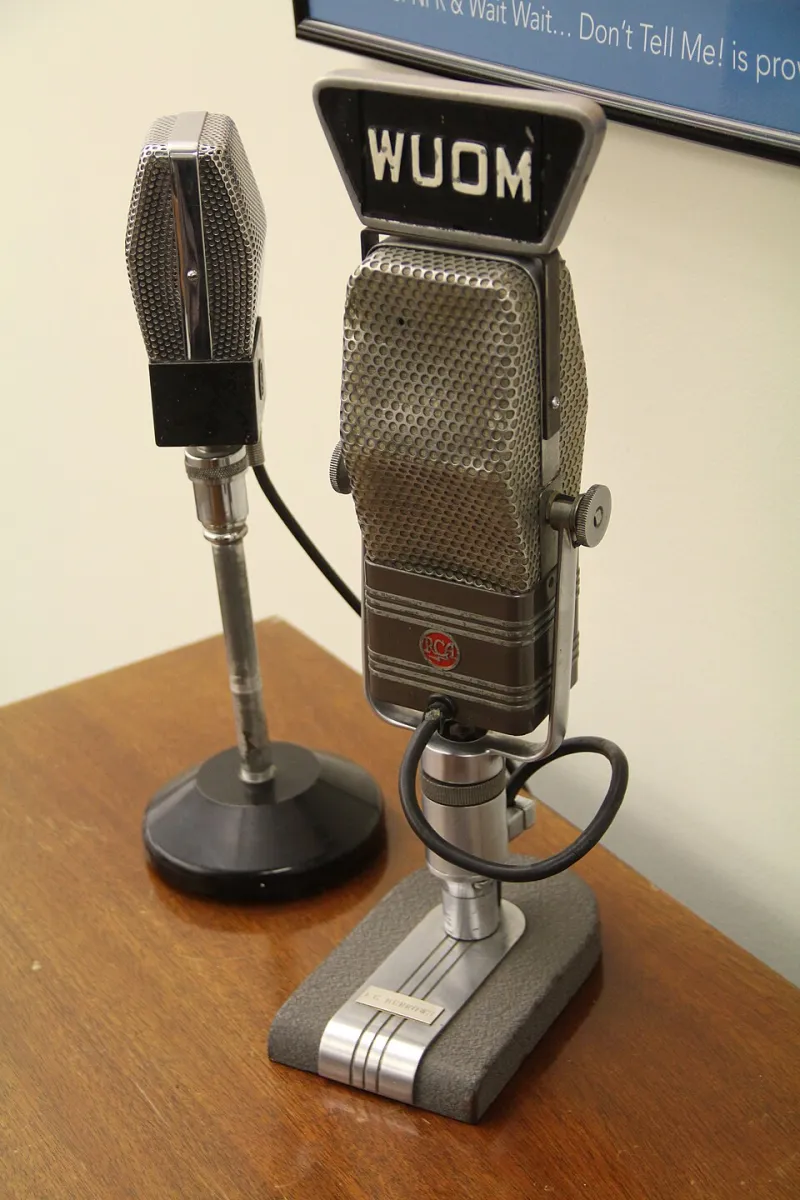
Photo: Fourandsixty, CC BY-SA 4.0, via Wikimedia Commons
Every few years, an old audition tape resurfaces and the internet has a good laugh: some legendary broadcaster, decades young, being told by a program director that his voice is wrong. Too nasal. Too drawly. Too strange. We laugh because we know how the story ends. The joke, of course, is on the program director.
But the laugh deserves a longer look, because the pattern isn't a quirk of old media. It's a structural feature of how gatekeeping works — and it's running again right now, just on different platforms.
When 'Wrong' Was the Whole Point
Consider the voices America actually fell in love with. The ones with regional gravel that no voice coach could sand off. The ones who talked a half-beat slower than broadcast standards demanded. The ones whose delivery sounded, on first listen, like a mistake.
Radio history is full of program directors who couldn't hear past the flaw — and listeners who couldn't hear anything else. That's not a contradiction. It's the mechanism. In an era of standardized, polished, announcer-school delivery, the 'imperfect' voice was the only one that sounded like a human being. The flaw wasn't a bug that slipped through the format. The flaw became the format.
Country radio was built on accents that network radio had spent decades training out of its talent. Late-night talk radio built empires on voices that were too weird for daytime — weirdness being exactly what a lonely driver on I-80 at 1 a.m. wanted for company. The night shift of American broadcasting was staffed almost entirely by people the day shift had rejected.
The Gatekeeper's Blind Spot
Here's what the program directors consistently missed: they were evaluating voices against a template, and templates only capture what already worked. A voice that fits the template sounds competent. A voice that doesn't fit the template sounds wrong — until it sounds like itself, at which point it sounds irreplaceable.
There's a difference between 'bad' and 'unfamiliar,' and human ears are notoriously bad at telling them apart on first exposure. Every beloved broadcast oddity went through a period of sounding wrong before it sounded like home. The gatekeepers only ever heard the first part. Listeners, given time, got to hear the second.
This is why rejection stories in broadcasting have a specific flavor. The rejection isn't usually cruel — it's procedural. 'Doesn't fit our sound.' 'Not what our audience expects.' Nobody says 'this is bad.' They say 'this is different,' and they mean it as an ending when it's actually just a beginning that needs a different door.
The Same Filter, New Pipes
Now for the uncomfortable part. We like to think the internet killed the gatekeeper. And in one sense it did — anyone can upload. But the algorithm is a program director with infinite patience and no taste, and it evaluates voices against templates too.
Watch what rises. Watch the cadence that gets rewarded, the pacing, the polish, the accent that's acceptably neutral. The 'creator economy' has its own announcer school now, its own unwritten standard of what a voice should sound like, and creators reverse-engineer it within weeks of starting. The odd voices are still getting filtered — not at the studio door, but at the recommendation layer, quietly buried by engagement metrics that punish the unfamiliar before it has time to become beloved.
The difference is that radio's rejections at least came with a human 'no.' Today's rejections are silent. Your voice doesn't get told it's too weird. It just never gets recommended to the two hundred thousand people who would have loved it.
What We Owe the Weird Voices
The opinionated thesis of this column is simple: 'flaw' is almost always just 'talent' without its format yet. The nasal voice needed a late-night slot. The drawl needed a country station. The slow talker needed long-form. The talent was never missing — the format was.
So the practical ask, for anyone building or curating a platform: build slack into the system for the unfamiliar. Program something you don't immediately get. Put a voice on air that doesn't match your sound, and give it a month before you judge it. Every legendary broadcaster who was ever turned away is evidence that your first instinct about a 'wrong' voice has a real chance of being your worst call.
The program directors who said no aren't remembered for their standards. They're remembered as the punchline. The people who said yes to the weird voices — those are the ones who built the radio America actually remembers.