Nobody Planned These: Five American Discoveries That Happened by Glorious Mistake
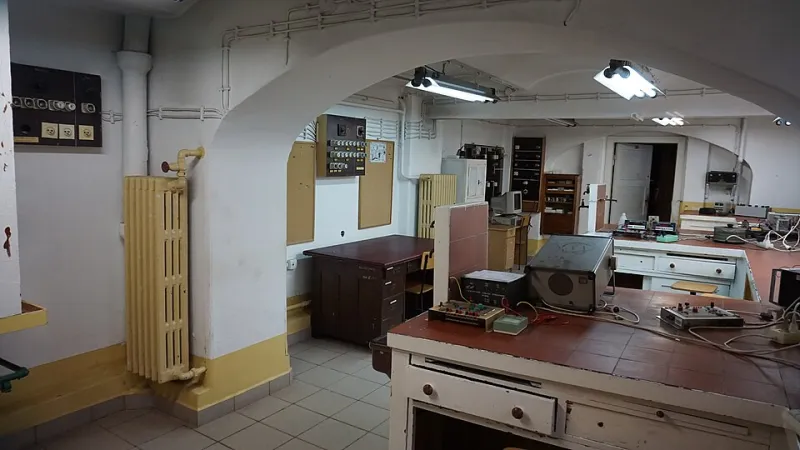
Photo: LukaszKatlewa, CC BY 4.0, via Wikimedia Commons
Science, as it gets taught in school, is a tidy business. Hypothesis. Experiment. Result. Repeat. The story of how knowledge actually advances is considerably messier — and considerably more interesting. Some of the most consequential breakthroughs in American scientific history arrived not through deliberate inquiry but through contaminated petri dishes, malfunctioning equipment, and the particular kind of intellectual courage it takes to look at an unexpected result and say: wait, what just happened?
The people in these stories weren't supposed to be the ones who changed everything. Several of them weren't even supposed to be in the room.
1. The Sweetener Nobody Asked For: The Accidental Discovery of Saccharin
In 1879, a chemist named Constantin Fahlberg was working at Johns Hopkins University on coal tar derivatives — not exactly the most glamorous corner of the scientific world. One evening, after a long day in the lab, he sat down to dinner and noticed that his bread tasted unusually sweet. He hadn't added anything to it. What he had done, apparently, was forget to wash his hands.
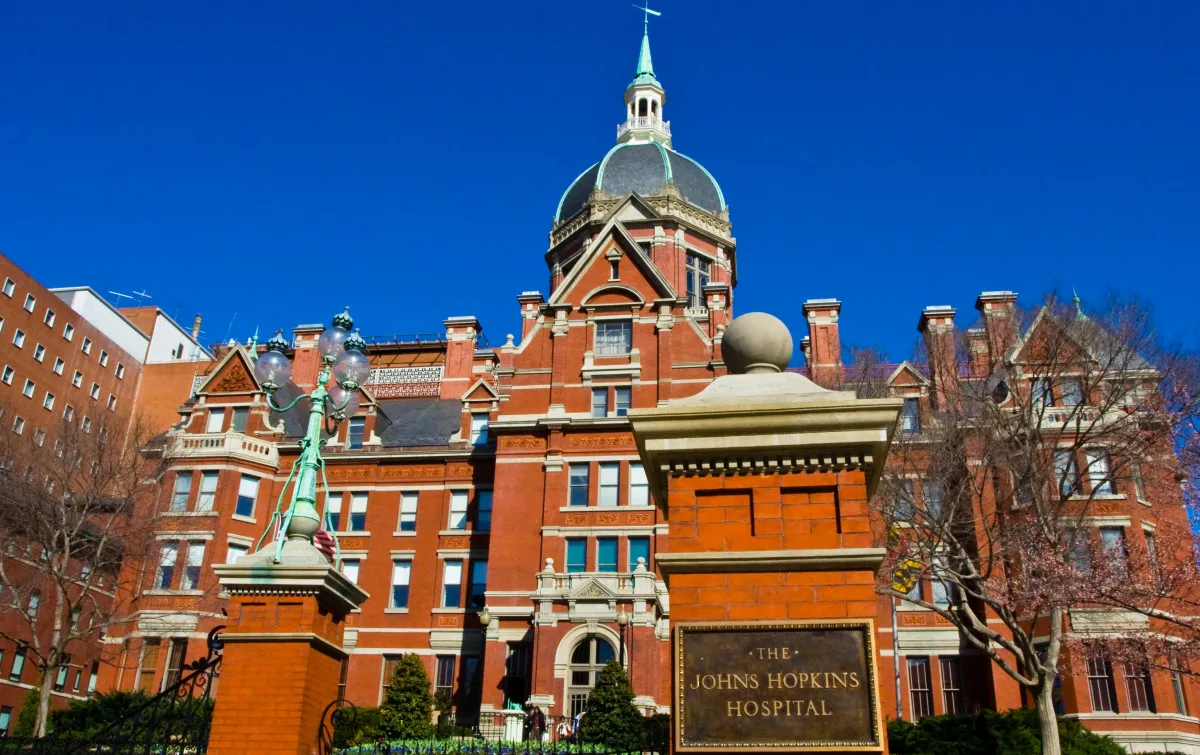 Photo: Johns Hopkins University, via farm3.static.flickr.com
The sweetness was coming from a compound he'd been synthesizing earlier that day — what would eventually be named saccharin. Fahlberg went back to the lab, tasted his equipment (an act that would horrify any modern chemist), and confirmed the finding. He filed a patent largely in his own name, sidelining his research supervisor Ira Remsen in a move that caused a professional falling-out that lasted decades.
The discovery wasn't just a quirk of culinary history. Saccharin became the foundation of the entire artificial sweetener industry, a market now worth billions of dollars annually. It also became one of the most studied food additives in history — subjected to decades of regulatory scrutiny — all because a researcher didn't wash up before dinner.
2. The Microwave Was a Chocolate Bar
In 1945, Percy Spencer was an engineer at Raytheon working on radar technology — specifically, on a component called a magnetron. He was standing near an active magnetron one afternoon when he noticed that the chocolate bar in his pocket had melted. Spencer wasn't the kind of person who shrugged and moved on. He was, by all accounts, a relentlessly curious man who had taught himself electrical engineering without ever attending college, having grown up in rural Maine and gone to work in a mill as a child.
 Photo: Percy Spencer engineer Raytheon, via www.maquetland.com
Instead of chalking the melted chocolate up to body heat, he started asking questions. He brought in popcorn kernels. He brought in an egg (which exploded, to the delight of his colleagues). Within months, Raytheon had filed a patent for what it called a "Radarange" — the first commercial microwave oven.
The early models were roughly the size and weight of a refrigerator and cost thousands of dollars. Mass-market microwave ovens didn't arrive until the 1970s. But the entire technology traces back to one engineer's refusal to accept a mundane explanation for an unusual observation — and to the fact that he happened to have chocolate in his pocket.
3. Teflon Didn't Stick to the Plan Either
In 1938, a young DuPont chemist named Roy Plunkett was trying to develop a new refrigerant. He'd been storing a compound called tetrafluoroethylene in pressurized canisters overnight, and when he came in one morning to work with it, the gas had vanished. The canister still had the same weight, but nothing came out when he opened the valve.
A less curious person might have tossed the canister and started over. Plunkett cut it open. Inside, he found a white, waxy residue coating the interior walls — a polymerized form of the compound that had, essentially, created itself. The substance was extraordinarily slippery. It was chemically inert. It was heat-resistant. It was, in short, polytetrafluoroethylene — which the world would eventually come to know as Teflon.
Teflon went on to become one of the most commercially versatile materials of the twentieth century, used in everything from cookware to spacecraft components to Gore-Tex fabric. None of it was planned. All of it started with a canister that didn't behave the way it was supposed to.
4. The Mold That Changed Medicine: Penicillin's American Chapter
The story of Alexander Fleming discovering penicillin in London in 1928 is well-known. Less celebrated is what happened when the discovery crossed the Atlantic — and the American researchers who turned a biological curiosity into a mass-produced weapon against infection.
By the early 1940s, a team at the USDA's Northern Regional Research Laboratory in Peoria, Illinois, was racing to find a way to produce penicillin at scale. The mold Fleming had identified was frustratingly difficult to grow in useful quantities. The breakthrough came when a lab assistant — in some accounts identified simply as a "lab aide" whose full name was not preserved in the official record — brought in a moldy cantaloupe from a local market. The Peoria strain of mold on that cantaloupe turned out to be dramatically more productive than anything the team had been working with.
The cantaloupe mold became the basis for virtually all of the penicillin produced during World War II. Millions of lives were saved by infections that would otherwise have been fatal. The woman who brought in the fruit — often referred to in historical accounts by the nickname "Moldy Mary," though her given name was Mary Hunt — was a lab technician who made a habit of scouring local markets for interesting specimens. Her instinct to look at ordinary things with scientific curiosity was, in its quiet way, one of the most consequential acts of the entire war effort.
5. Cosmic Background Radiation and the Pigeons in the Antenna
In 1964, two Bell Labs radio astronomers named Arno Penzias and Robert Wilson were trying to use a large antenna in Holmdel, New Jersey, to study radio waves from the Milky Way. They kept picking up a persistent, low-level hiss that they couldn't explain and couldn't get rid of. Their first hypothesis was embarrassingly practical: pigeons had been roosting in the antenna and leaving what Penzias diplomatically described as "white dielectric material" on the equipment.
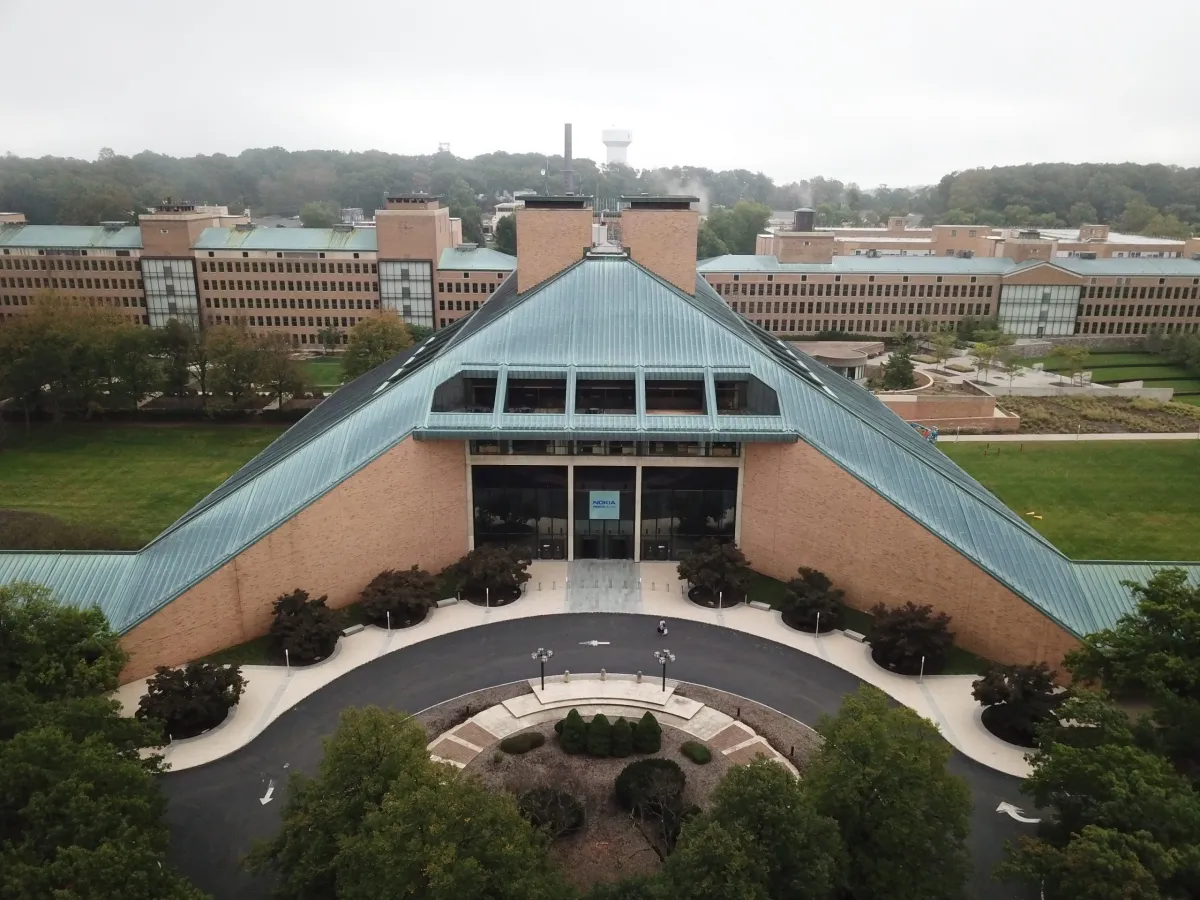 Photo: Bell Labs, via innovationsoftheworld.com
They cleaned the antenna. They removed the pigeons (humanely relocating them, only to have the birds return — a detail that feels cosmically appropriate). The hiss remained.
What Penzias and Wilson had inadvertently detected was the cosmic microwave background radiation — the faint thermal echo of the Big Bang itself, still reverberating through the universe some 13.8 billion years after the fact. It was one of the most significant confirmations in the history of cosmology, providing powerful evidence for the Big Bang theory at a moment when the scientific community was still debating it.
Penzias and Wilson won the Nobel Prize in Physics in 1978. The pigeons, as far as history records, received no formal acknowledgment.
What All Five Have in Common
The thread running through each of these stories isn't luck, exactly — or not luck alone. It's a particular quality of attention. The willingness to stop when something doesn't make sense, to resist the urge to explain away an anomaly, and to follow an unexpected observation wherever it leads, even when it takes you somewhere nobody had thought to look.
The institutions these people worked within were often skeptical, sometimes dismissive, and occasionally actively obstructive. The discoveries happened anyway — because someone, somewhere, had the stubbornness to keep asking why.