They Said She Was Unsaveable. She Spent the Next Forty Years Proving Them Wrong — One Patient at a Time.

In 1961, a seventeen-year-old girl from Tulsa, Oklahoma, was admitted to the Institute of Living in Hartford, Connecticut. She was diagnosed with schizophrenia — a label that, as would later become clear, almost certainly wasn't right. She was subjected to treatments that included electroconvulsive therapy, solitary confinement in a room called the "seclusion suite," and a rotating cast of medications that didn't help and sometimes made things worse.
 Photo: Institute of Living, via www.rehab.com
The staff noted in her chart that she was among the most disturbed patients they had seen.
Her name was Marsha Linehan. And she was going to spend the next several decades quietly dismantling the assumptions that had put her in that room.
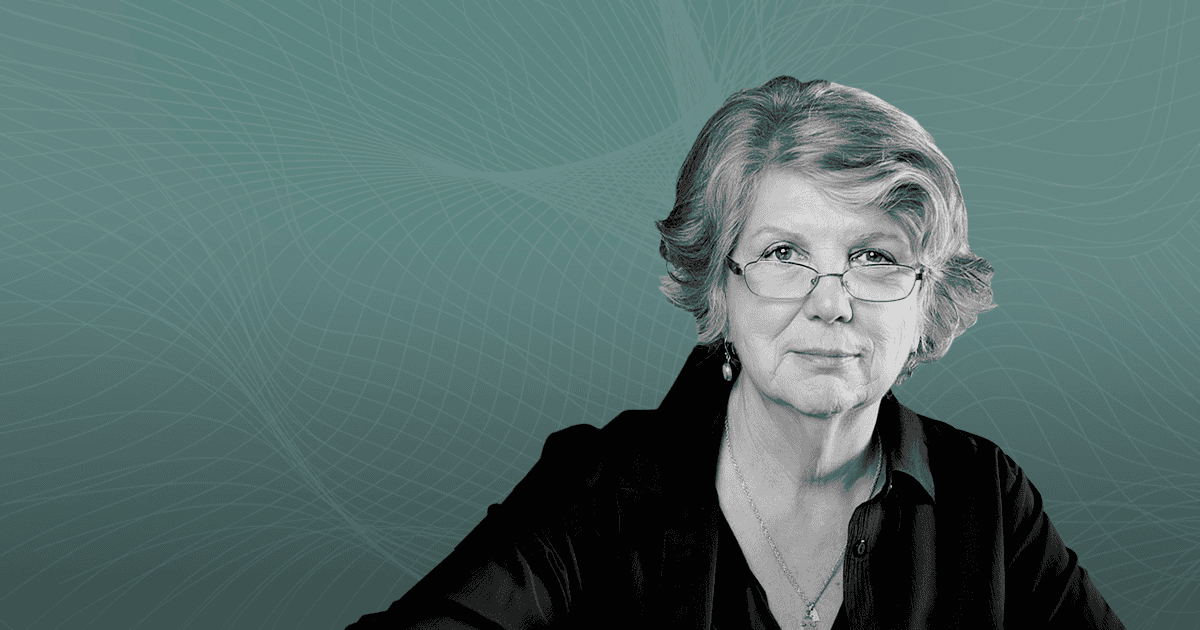 Photo: Marsha Linehan, via relate.com.my
What It Feels Like From the Inside
Linehan's condition — what we would now recognize as borderline personality disorder, though that diagnosis didn't exist in its current form until 1980 — made her feel, in her own words, like she was in hell. Not metaphorically. She described an inner experience of such sustained emotional intensity that the outside world barely seemed real. She hurt herself. She couldn't function in the ways the people around her expected. And the treatments available to her at the time weren't designed to address what was actually happening.
She eventually left the Institute of Living, made her way to college, then graduate school, and earned a PhD in psychology from Loyola University Chicago. None of it was smooth. She continued to struggle, continued to use the coping strategies she'd discovered — sometimes dangerous ones — and continued to carry the weight of what she'd experienced without telling almost anyone what that experience had actually been.
For decades, she kept her history entirely private. She was building a scientific career, and in the 1970s and 1980s, a researcher who disclosed a history of psychiatric hospitalization was not likely to be taken seriously. So she didn't disclose it. She just worked.
Building a Therapy From the Inside Out
The problem Linehan was trying to solve — the one that would eventually become her life's work — was deceptively specific: how do you treat people who are so emotionally volatile that standard therapeutic approaches either don't reach them or actively make things worse?
Cognitive behavioral therapy, the dominant evidence-based approach of her era, operated on a basic premise: identify distorted thinking, challenge it, replace it with more accurate thought patterns. For many patients, it worked well. For the population Linehan was most interested in — people with extreme emotional dysregulation, people who self-harmed, people who had been told by multiple therapists that they were untreatable — pure CBT often felt like being told to simply think better thoughts while drowning.
Linehan's insight, drawn in part from her own experience of what it actually felt like to be in crisis, was that the missing ingredient was acceptance. Not acceptance in the passive, give-up sense. But a genuine, radical acknowledgment that the patient's pain was real, that their responses to that pain made sense given what they'd been through, and that change was still possible — and necessary — without first requiring them to agree that everything they'd done was wrong.
She called the resulting framework Dialectical Behavior Therapy. The "dialectical" part referred to the central tension the therapy was built around: the balance between accepting yourself as you are and committing to changing the behaviors that are destroying your life. It sounds almost philosophical. In practice, it was intensely practical — skills-based, structured, and relentlessly focused on giving patients concrete tools rather than just insight.
The Science That Changed a Field
The clinical trials Linehan ran in the late 1980s and early 1990s produced results that were, by the cautious standards of psychological research, remarkable. DBT reduced suicide attempts. It reduced hospitalizations. It kept people in treatment longer than other approaches. For a population that had largely been written off — patients with borderline personality disorder were often described, in clinical settings, as "difficult" or "manipulative," language that barely concealed the profession's frustration with its own failure to help them — the data was transformative.
It didn't transform the field overnight. Nothing does. But DBT spread steadily through the 1990s and 2000s, first into university treatment centers, then into community mental health, then into adolescent programs, eating disorder clinics, and substance abuse treatment. Today it is one of the most widely practiced evidence-based therapies in the world, used not just for borderline personality disorder but for depression, PTSD, eating disorders, and addiction.
Linehan received awards, chaired departments, trained generations of therapists, and built a research center at the University of Washington that became one of the most respected in the country. All of it while carrying a secret that she finally disclosed publicly in 2011, in a New York Times interview that landed with the quiet force of a long-held breath finally released.
The Confession That Changed the Conversation
When Linehan went public with her history — the institutionalization, the self-harm, the years of suffering that had preceded her career — the response was not what she might have feared in the decades when she'd kept it hidden. It was, largely, gratitude.
Patients who had been treated with DBT described the disclosure as a revelation. Their therapist hadn't learned about their experience from a textbook. She had lived a version of it. The therapy hadn't been designed by someone looking in from the outside, making educated guesses about what despair felt like. It had been built, at least in part, from the inside.
For the mental health field more broadly, the disclosure raised a question that hasn't been fully answered yet: how many breakthroughs have we missed because we systematically excluded from research the people with the most direct knowledge of what we're trying to understand?
Linehan's career is one answer to that question. But it required her to hide who she was for thirty years to make it happen. In a different world — one that didn't require researchers to perform unbroken wellness — she might have been able to say it sooner.
The Longest Way Around
The path from seclusion room to research pioneer is not one anyone would design on purpose. It ran through years of suffering, through silence, through the particular exhaustion of building something important while pretending a large part of yourself doesn't exist.
But it produced something that a more conventional path almost certainly wouldn't have: a therapy that works precisely because its architect understood, from the inside, what it felt like to be told you were beyond saving.
She wasn't. And because she wasn't, millions of people who've been told the same thing have somewhere to go now.
That's not a footnote to the story of Dialectical Behavior Therapy. It's the whole point.