The Engineer They Tried to Redirect: How Jeanne Lee Crews Built the Invisible Shield That Keeps Astronauts Alive
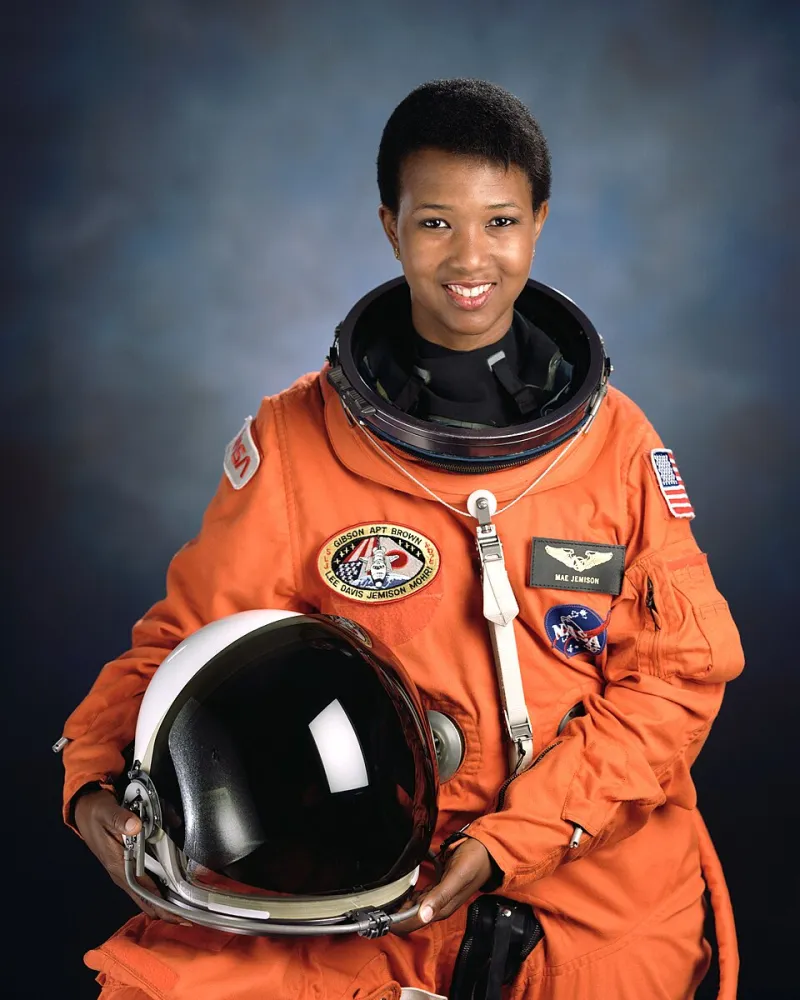
Photo: NASA, Public domain, via Wikimedia Commons
Somewhere above your head right now, traveling at roughly 17,500 miles per hour, the International Space Station is threading its way through a debris field that would be terrifying if anyone on board stopped to think about it too hard. Flecks of paint. Fragments of defunct satellites. Micrometeorites no bigger than a grain of sand, moving fast enough to punch through aluminum like it was tissue paper.
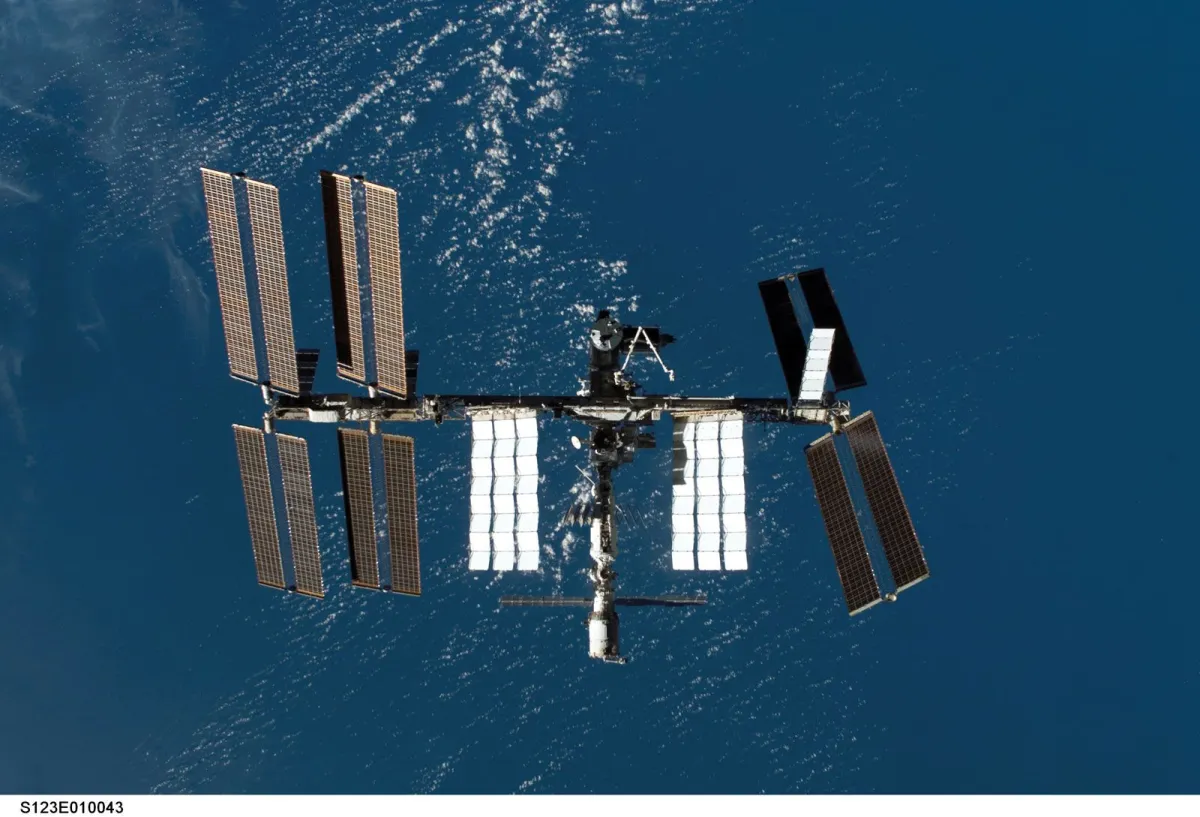 Photo: International Space Station, via cdn.britannica.com
The astronauts sleeping up there tonight aren't thinking about it. They don't have to. Because decades ago, a woman in Huntsville, Alabama worked out how to stop those fragments cold — and almost nobody outside the aerospace engineering community knows her name.
Her name is Jeanne Lee Crews. And she almost never got the chance to save anyone at all.
The Detour They Designed for Her
Crew's story begins in the early 1960s, a moment in American history when the space race was burning white-hot and the country was simultaneously telling half its population that science and engineering were not for them. Women who showed aptitude for math and physics were routinely steered toward teaching, nursing, or home economics — fields that were considered appropriately feminine, regardless of where a young woman's actual talents pointed.
Crews was steered. Hard. The institutional pressure on women of her generation to find a "suitable" direction was not subtle or occasional; it was baked into the advising systems, the hiring pipelines, and the cultural assumptions of virtually every engineering program in the country. The message was consistent: this room isn't for you.
What makes Crews remarkable isn't just that she ignored that message. It's that she found a way through a system that had been specifically designed to redirect her, and then she used her position inside that system to solve one of the most consequential engineering problems of the Space Age.
She joined NASA's Marshall Space Flight Center in Huntsville — the same facility where Wernher von Braun had built the Saturn V rocket program — and began working in a field that would come to define her career: hypervelocity impact research.
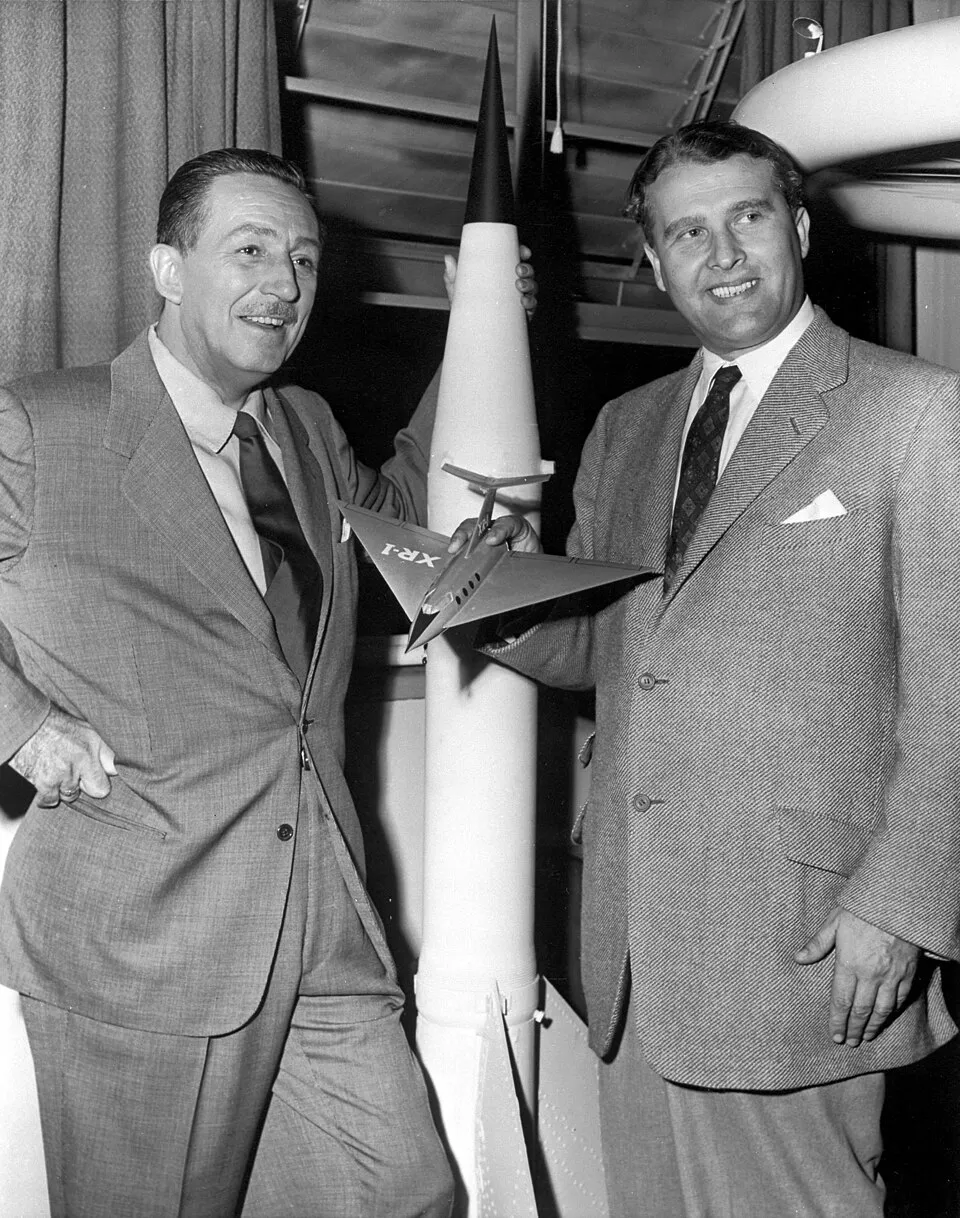 Photo: Wernher von Braun, via upload.wikimedia.org
In plain English: what happens when very small things hit very large things very, very fast?
The Problem Nobody Had Fully Solved
Space looks empty. It is not empty.
Even before the modern debris problem created by decades of satellite launches and in-orbit collisions, the natural space environment was peppered with micrometeorites — tiny particles moving at speeds that make a rifle bullet seem leisurely. A particle the size of a pea, hitting at orbital velocity, carries the kinetic energy of a bowling ball thrown at full speed. A particle the size of a sand grain can still do catastrophic damage to an unprotected surface.
For the early space program, this was largely a theoretical concern. The missions were short. The capsules were small. The risk was real but manageable.
But when NASA began designing the Space Shuttle — a vehicle intended to fly dozens of missions, carry crews of up to eight, and eventually help construct a permanent space station — the micrometeorite problem became urgent. You couldn't build a spacecraft thick enough to stop every possible impact; the weight penalties would make the vehicle impossible to fly. You needed something smarter.
The solution Crews developed and refined over years of research was elegant in the way that the best engineering solutions always are: it made the problem defeat itself.
The Bumper: Making Physics Work Backward
The Whipple shield concept — named for astronomer Fred Whipple, who proposed the basic idea in 1947 — involves placing a thin sacrificial outer layer some distance in front of the main hull. When a hypervelocity particle hits that outer layer, it doesn't simply punch through. The impact shatters the particle into a diffuse cloud of smaller fragments and vapor, which then spreads out over a larger area before reaching the inner wall. The energy that would have punched a clean hole instead gets distributed and absorbed.
The concept was sound. Making it work in practice — figuring out the precise materials, spacing, configurations, and layer arrangements that would protect against the full range of debris the shuttle might encounter — required years of rigorous experimental work. Crews was central to that work at Marshall.
Her contributions to what became known as the Stuffed Whipple Shield — an enhanced version incorporating additional layers of Nextel ceramic fabric and Kevlar — helped transform a theoretical concept into a deployable, weight-efficient system that could actually fly. The shielding she helped develop was incorporated into the Space Shuttle and later became a critical component of the International Space Station's design, where it has since been upgraded and refined but remains foundational.
Every astronaut who has lived aboard the ISS — and there have been hundreds of them, representing dozens of countries — has been sleeping behind walls that Jeanne Lee Crews helped figure out how to build.
The Invisibility of Essential Work
There's a particular kind of obscurity that attaches itself to engineering work that succeeds. When a bridge stands, nobody thinks about the calculations that kept it standing. When a plane lands safely, nobody thinks about the materials science that kept the wings attached. And when astronauts return from six-month missions on the ISS without a single hull breach, nobody thinks about the woman in Huntsville who spent decades working out how to make that possible.
Crews received NASA's Exceptional Engineering Achievement Medal for her work. She published extensively in the field. She mentored younger engineers and helped build the institutional knowledge base that continues to protect crewed spacecraft to this day.
But she is not a household name. She doesn't have a movie. She doesn't have a monument.
What she has is a legacy that is, in the most literal sense possible, holding the line between human beings and the void.
What the Detour Was Really Worth
It would be convenient to tell this story as a simple triumph-over-adversity narrative — woman beats the system, system is embarrassed, everyone learns a lesson. But the reality is more complicated and, in some ways, more sobering.
The institutional barriers that tried to redirect Jeanne Lee Crews weren't aberrations. They were policy. They were culture. They were the operating assumptions of an entire era. And because of those assumptions, we will never know how many other Jeanne Lee Crewses were successfully redirected — how many women with the talent and drive to solve critical problems were instead handed a different syllabus and pointed at a different door.
What Crews did was find the crack in the wall and push through it anyway. The persistence that took is not a small thing. It is, in its own way, as impressive as the engineering.
The next time you watch a launch and feel that particular human thrill of someone slipping the bonds of Earth, remember that the invisible shield keeping them alive was built by someone who was told, more than once, that this wasn't her room.
She walked in anyway. And then she made the room safer for everyone who came after.