He Memorized the System That Broke Him — Then Used It to Break Others Free
There's a particular kind of knowledge you can only earn the hard way. Not in a classroom, not in a courtroom, and definitely not from a textbook. Calvin Willis earned his in a Louisiana prison cell, staring at the ceiling for twenty-two years, cataloging every crack in the system that put him there.
When he was exonerated in 2003 — cleared by DNA evidence that should have been examined decades earlier — most people assumed he'd disappear. Cash a settlement, find some quiet corner of the world, and try to forget. That's what you'd expect. That's what makes sense.
Calvin had other plans.
What a Cell Teaches You That a Law Degree Doesn't
Here's the thing about wrongful convictions: they don't happen because the system breaks down. They happen because the system works exactly as designed — just pointed at the wrong person. Eyewitness misidentification. Coerced confessions. Junk science dressed up in lab coats. Evidence that gets buried, lost, or never collected in the first place.
Calvin watched all of it up close. He watched men get railroaded by forensic testimony that sounded authoritative and turned out to be fabricated. He watched public defenders juggle eighty cases at a time, too stretched thin to find the thread that would unravel a conviction. He watched the machinery of the justice system grind forward with total indifference to whether it had the right person.
And he took notes. Mentally, obsessively, over years.
By the time he walked out of Louisiana's Forcht Wade Correctional Center, Willis didn't just understand how wrongful convictions happened. He understood them the way a mechanic understands an engine — by feel, by sound, by every place the thing had rattled and misfired while he was trapped inside it.
That knowledge, it turned out, was extraordinarily rare.
Building the Lab Nobody Else Would Build
Willis didn't have a degree. He didn't have professional credentials. What he had was credibility that no credential can manufacture: he had been there.
In the years following his release, he began working with innocence organizations, initially in a support capacity — helping newly exonerated men and women navigate the disorienting experience of reentry. But his usefulness kept expanding. Attorneys started asking him to review case files, not for legal analysis but for something harder to name. Pattern recognition. An instinct for where the evidence had been handled wrong, where the testimony didn't quite line up, where the story had been forced into a shape it didn't naturally take.
He was, in the language of the legal world, a subject matter expert. In plain terms, he was someone who had survived the machine and could read its blueprints.
Eventually, that informal expertise got formalized. Willis became a central figure in building what advocates describe as a wrongful conviction defense lab — a resource center that combines forensic review, case analysis, and direct advocacy for people still inside. The lab doesn't have a sleek corporate campus. It operates on nonprofit funding, in borrowed spaces, with a rotating cast of law students, retired forensic specialists, and exonerees who give their time because they know exactly what's at stake.
What it does have is a track record.
The Credibility That Can't Be Faked
There's a reason Willis's voice carries weight in rooms where lawyers and judges argue. He doesn't theorize about what it feels like to be convicted of something you didn't do. He doesn't speculate about the psychological toll of a system that has decided you're guilty and stopped looking for anyone else. He lived it, and that lived experience functions like a kind of moral authority that credentials simply cannot replicate.
Innocence work is full of brilliant, committed attorneys and advocates. It needs them. But it also needs people who can look a frightened inmate in the eye and say, with total honesty, I know what this feels like, and I know what it takes to fight it. That's a different conversation. It opens different doors.
Willis has said in interviews that his anger — the fury he felt every single day of those twenty-two years — never left him. It just changed shape. It stopped being something that ate at him and started being something he aimed.
The Crooked Path to Justice
What makes Willis's story so distinctly American, and so distinctly relevant right now, is the way it exposes the gap between what the justice system claims to be and what it actually does to real people. Wrongful conviction isn't a glitch. According to the National Registry of Exonerations, more than 3,400 people have been exonerated since 1989, representing thousands of collective years stolen. And those are only the cases that got far enough for someone to look.
The people best positioned to fix that aren't always the ones with the most prestigious affiliations. Sometimes they're the ones who paid the highest price to understand the problem.
Calvin Willis didn't choose the path that brought him to this work. Nobody chooses twenty-two years in prison. But somewhere along that crooked road, he found something the system never intended to give him: the exact knowledge he needed to become its most effective critic.
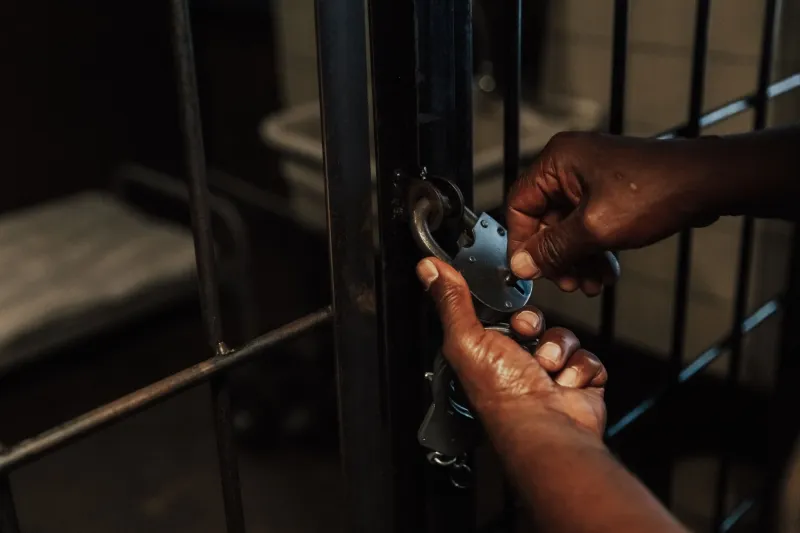
He learned the lock from the inside. Now he's handing out keys.