She Watched the Worst Things Humans Do to Each Other — Then Walked Into the Room Where They Decide
In the summer of 1993, Samantha Power was twenty-three years old, freelancing from a city under siege, and filing dispatches that most American editors weren't entirely sure what to do with. Sarajevo was being shelled. People were dying in their streets, in their homes, at the market. And Power was there, watching, taking notes, trying to explain to readers an ocean away why any of it should matter to them.
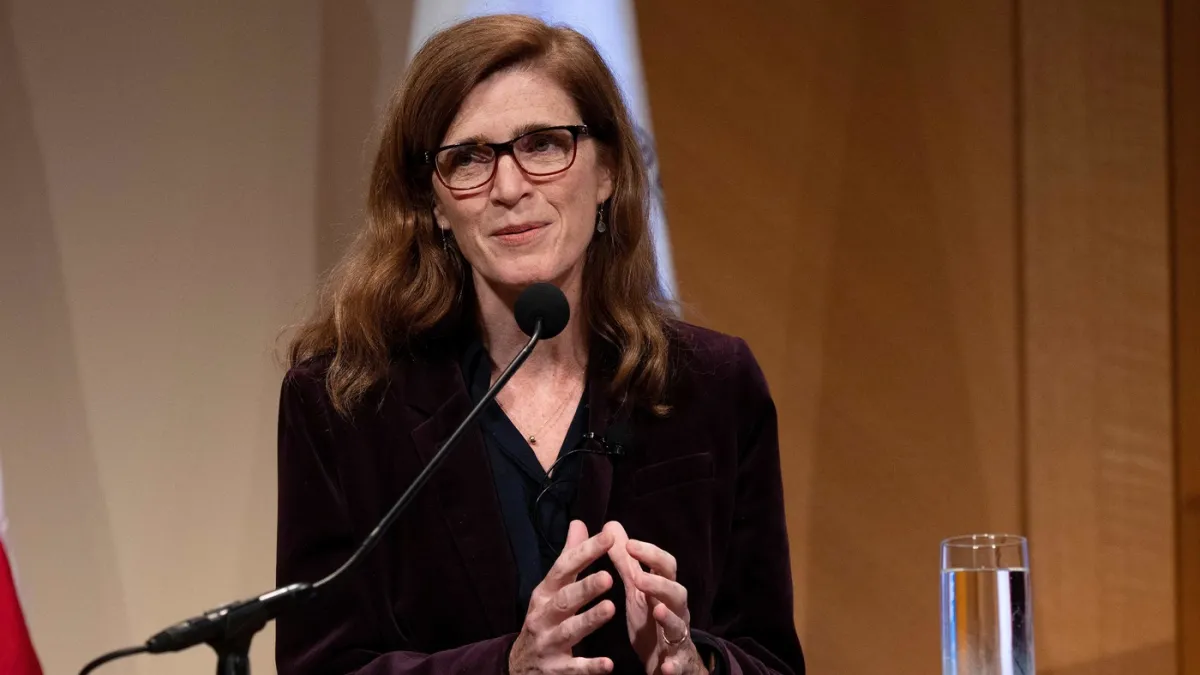 Photo: Samantha Power, via media.npr.org
She had no famous byline. No network affiliation. No safety net beyond whatever instinct had carried her there in the first place. What she had was an absolute refusal to pretend she hadn't seen what she'd seen — and it turned out that refusal was worth more than any credential she might have been missing.
The Wrong Place at Exactly the Right Time
Power was born in Dublin and came to the United States as a child. She grew up in Pittsburgh and Atlanta, studied at Yale, and landed in journalism the way a lot of young people do: by going somewhere important and figuring out the rest later. But the Balkans in the early 1990s weren't just a career opportunity. They were a moral emergency, and Power understood the difference.
The war in Bosnia — the sieges, the ethnic cleansing, the mass atrocities that European nations and the United States were watching with something between helplessness and studied indifference — became the defining experience of her early life. She wasn't just reporting it. She was being formed by it. Every dispatch she filed was also a question she was asking herself: What does it mean to witness something this terrible and then go home and do nothing about it?
For most journalists, that question is professional and philosophical. For Power, it became something closer to a vocation.
A Pulitzer Built From Outrage
She eventually made it to Harvard Law School — another pivot that looked sideways on paper — and then to Harvard's Kennedy School of Government, where she wrote the book that would change her life. "A Problem from Hell": America and the Age of Genocide was published in 2002 and did something genuinely rare: it made the history of American policy on genocide feel like a thriller and an accusation at the same time.
The book examined case after case — Armenia, the Holocaust, Cambodia, Bosnia, Rwanda — where the United States had the information, the capacity, and the moral clarity to intervene and chose not to. Power wasn't interested in assigning blame for its own sake. She was interested in understanding the machinery of inaction: how bureaucracies rationalize looking away, how political self-interest gets dressed up as strategic realism, how the word "genocide" itself becomes a trap that governments work to avoid springing.
It won the Pulitzer Prize. It was read in the halls of government. And it established Power not as a journalist who had wandered into policy, but as a thinker who had earned the right to be in the room.
The Accidental Insider
Here's the thing about Samantha Power's rise that gets lost in the official biography: she wasn't supposed to be a Washington insider. She was, by temperament and history, the person on the outside pressing her face against the glass and writing furiously about what she saw.
Her connection to Barack Obama began almost accidentally — she was an early foreign policy advisor during his 2008 campaign, the kind of role that could easily have stayed informal and low-profile. Then she called Hillary Clinton "a monster" in an off-the-record comment that turned out to be on the record, resigned from the campaign, and many people assumed that was the end of the story.
It wasn't. Obama won. Power joined the National Security Council. And in 2013, he nominated her to be the United States Ambassador to the United Nations — one of the most visible, high-stakes diplomatic posts in the world.
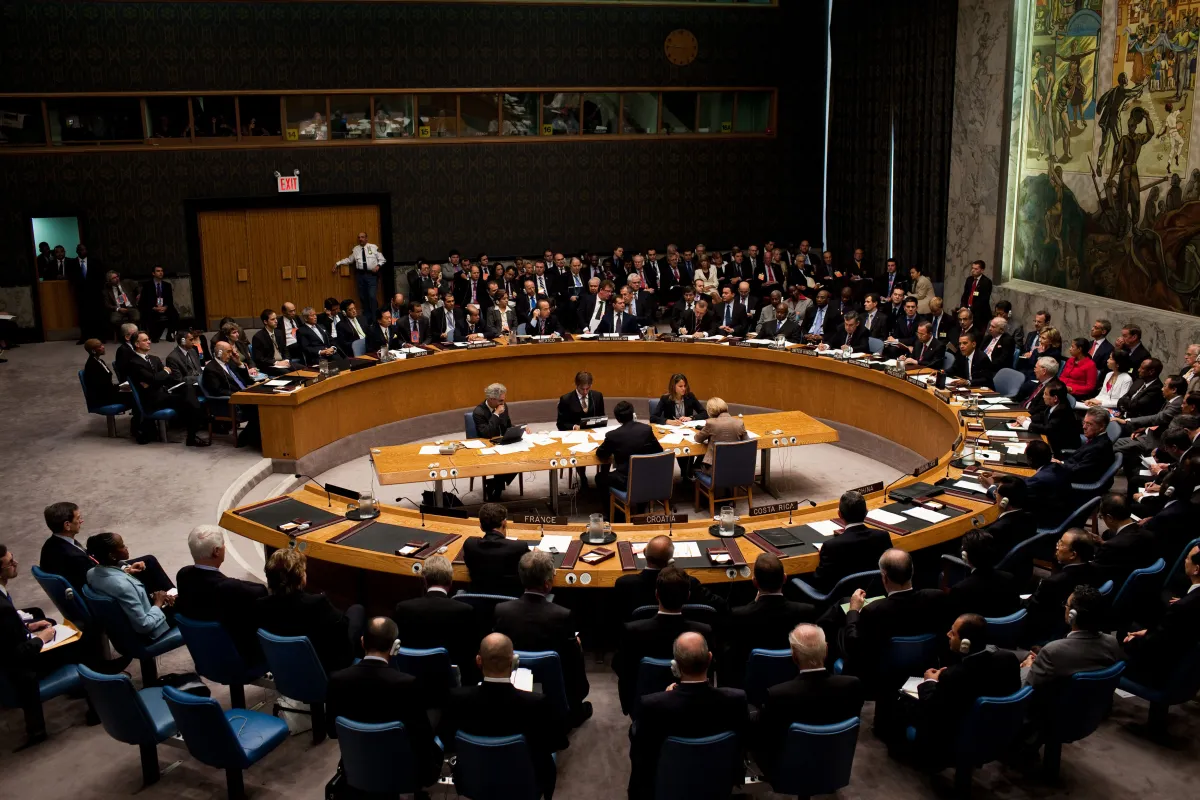 Photo: United Nations Security Council, via www.americansecurityproject.org
The woman who had been freelancing from a besieged city with no credentials now sat in the Security Council chamber where the decisions she'd once criticized from the outside were made.
Looking Away Was Never an Option
What made Power effective in that role — and what made her genuinely unusual in the diplomatic world — was exactly the quality that had made her an unlikely candidate for it. She had never learned to perform detachment.
Most diplomats are trained, explicitly or implicitly, in the art of strategic distance. You don't let the human cost of a situation overwhelm the political calculus. You speak in carefully constructed language that preserves options and avoids commitment. Power had spent her career doing the opposite, and she couldn't entirely stop.
She wept publicly at the Security Council during debates on Syria. She called out Russian and Syrian representatives by name for blocking aid to civilians. She gave speeches that sounded less like diplomatic statements and more like the dispatches of someone who had been in Sarajevo in 1993 and hadn't forgotten what she'd seen.
Her critics — and she had plenty — argued that this was naive, that emotion was a liability in the room where power actually operated. Her defenders argued that she was the only person in the room saying the things that needed to be said.
Both were probably right, in different ways. And the tension between those two truths is what makes her career genuinely interesting.
The Distance Between Sarajevo and New York
Power went on to serve as U.S. Ambassador to the United Nations under President Biden, returning to the role in a different moment and with a different kind of weight behind her words. She'd written memoirs, taught at Harvard, built a reputation that spanned journalism, academia, and government in a way that's genuinely rare.
But the thread that runs through all of it is surprisingly simple: she went somewhere terrible when she was young, she paid attention, and she refused to stop paying attention when it would have been professionally convenient to do so.
That's not a policy strategy. It's not a career plan. It's something closer to a character trait — one that, in her case, happened to be exactly what the moment required.
The crooked path from Sarajevo to the Security Council wasn't planned. But looking back, it's hard to imagine how she could have arrived there any other way.